Become a licensed Aircraft Maintenance Engineer
The Aircraft Maintenance Engineer's Licence (AMEL) qualifies you to inspect, maintain and certify aircraft as airworthy — the engineer whose signature releases an aircraft back to service. Kenya Aeronautical College trains AMEL candidates in two internationally recognised categories, Airframes & Engines and Avionics, aligned to Kenya Civil Aviation Authority (KCAA) personnel-licensing requirements and delivered in partnership with Aircraft Maintenance College 66 (AMC66), Netherlands, toward the EASA Part-66 modular syllabus.
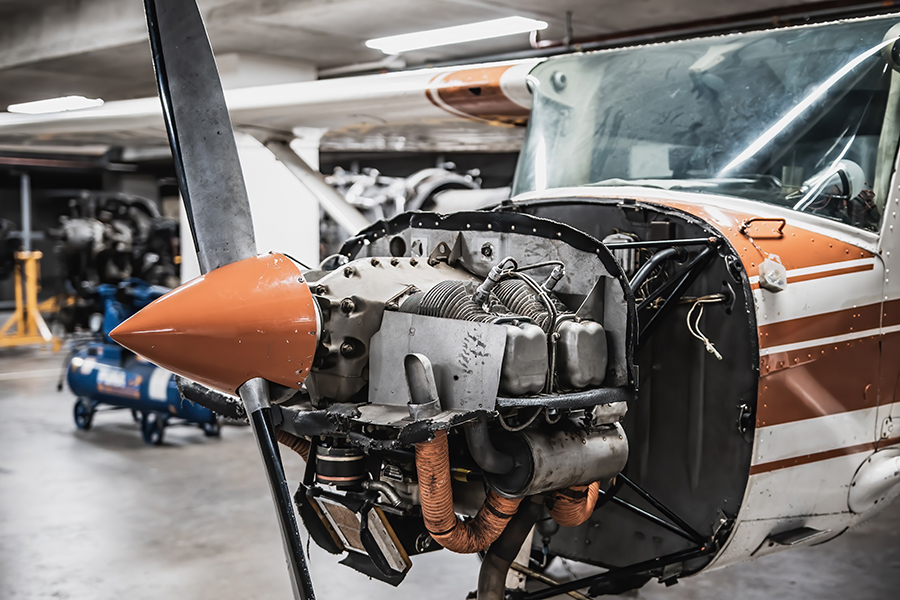
A career in licensed aircraft maintenance
Licensed engineers are among the most in-demand professionals in aviation — every airline, maintenance organisation and operator depends on them. If you are practical, precise and safety-minded, the AMEL is your route into a globally portable, well-paid engineering career.
Licensed AME (B1 / B2)
Certify airframe, engine, electrical and avionic systems and issue the Certificate of Release to Service.
AMO / Line & Base Maintenance
Work in Approved Maintenance Organisations on scheduled line checks and heavy base maintenance.
Airlines & Operators
Join carriers, charter, cargo and business-aviation operators across Kenya, Africa and the Gulf.
Curriculum & core modules draft — confirm with faculty
The AMEL follows the modular EASA Part-66 basic-knowledge structure, giving you the theory and hands-on competence to work on modern aircraft. Indicative modules include:
- Mathematics & Physics for engineers
- Electrical & Electronic Fundamentals
- Digital Techniques & Electronic Instrument Systems
- Aerodynamics, Human Factors & Aviation Legislation
- Materials, Hardware & Maintenance Practices
- Gas Turbine & Piston Engines (B1) / Avionic Systems (B2)
- Aircraft Structures & Airframe Systems
- Certification & the Certificate of Release to Service
Module list is indicative and pending confirmation of the current KAC/AMC66 syllabus and category split (B1 Airframes & Engines / B2 Avionics).
Who can apply draft — confirm cut-offs
- Minimum age 18 years
- KCSE certificate with credit passes in Mathematics, Physics and English
- Good command of English (the medium of instruction)
- Physically fit for aircraft maintenance work
Don't meet a requirement yet? KAC runs a bridging programme in Mathematics, Physics and English so motivated applicants — including international students — can qualify for entry. Exact KCSE grade cut-offs to be confirmed by the admissions office.
A recognised path to a licensed career
Kenya Civil Aviation Authority (KCAA) personnel licensing
AMEL training at KAC is aligned to KCAA's personnel-licensing framework (Civil Aviation (Personnel Licensing) Regulations, 2018). KAC's sister company, KAC Aviation Engineering Ltd, is a KCAA-approved Aircraft Maintenance Organisation (AMO), giving trainees a real maintenance environment. The programme runs in partnership with Aircraft Maintenance College 66 (AMC66), Netherlands, toward the EASA Part-66 modular licence.
KCAA categorises the AMEL by Airframes & Engines and Avionics. EASA Part-66 categories (A, B1, B2, C) are shown as an international cross-reference. Exact approval wording to be confirmed before publication.
Start your application
Is the AMEL recognised internationally?
What's the difference between Airframes & Engines and Avionics?
I didn't get the required grades — can I still join?
How do I apply?
Ready to become a licensed aircraft engineer?
Applications for the September 2026 intake are open. Secure your place at Kenya's aviation college at Wilson Airport, Nairobi.